
Quzhou's innovation drives green growth of tea-oil camellia industry
Behind the bountiful harvest of over 46,660 hectares of tea-oil camellia forests in Quzhou, Zhejiang province, a longstanding challenge in the industry is being quietly overcome.
The once low-value byproduct, tea seed cake, has been transformed by the Quzhou Academy of Agricultural and Forestry Sciences into high-value products such as natural handmade soap, shampoo, and dishwashing liquid, adding significant value to the tea-oil camellia industry chain.
Traditionally, large quantities of tea seed cake were produced each year in Quzhou, primarily used as low-value organic fertilizer. To address this inefficiency, the Quzhou Academy of Agricultural and Forestry Sciences collaborated with Zhejiang A&F University to conduct research on the functional analysis and high-value use of tea seed cake.

Tea seed cake. [Photo/Tide News]
"Tea seed cake is rich in active ingredients like saponin, flavonoids, and polysaccharides. We've focused on saponin for its natural cleansing, antibacterial, and de-greasing properties, developing products such as handmade soap and detergent," said Shi Zijian, deputy director of the Forestry Institute at the Quzhou Academy of Agricultural and Forestry Sciences.
Unlike many commercial products, their handmade soap uses traditional cold processing and contains no chemical additives.
The research team has partnered with local companies to bring these products to market by the end of the year.
Estimates suggest that each metric ton of tea seed cake can yield 10 percent to 12 percent saponin, increasing product value by 5 to 8 times.
This innovation not only addresses the low utilization rate of tea-oil camellia byproducts but also paves a new path for the green, high-value development of the local tea-oil camellia industry.
 City brand logo - fist-and-palm salute
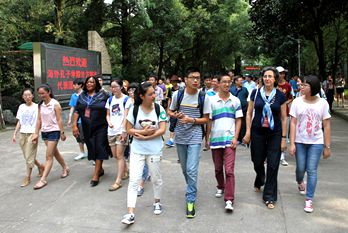 Confucianism on campus
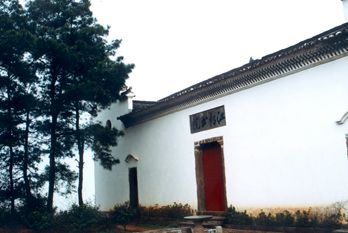 The culture of the academy
