



Zhejiang rolls out plan to upgrade logistics system
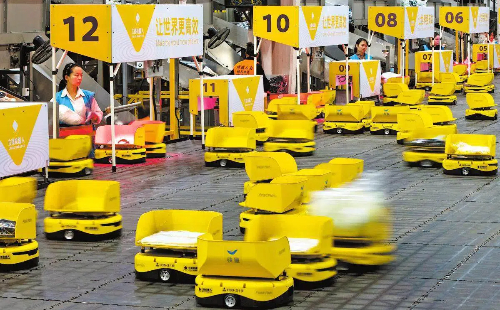
Robots sort express parcels at a logistics center in Huzhou, East China's Zhejiang province, on Nov 11. [Photo/IC]
Zhejiang has unveiled a new action plan aimed at lowering logistics costs and accelerating a shift toward greener, smarter, and more efficient transport networks, as part of the province's push to modernize its logistics system.
According to the plan, by 2027, Zhejiang aims to reduce total social logistics costs to about 13 percent of GDP, while expanding sea-rail container volumes to more than 2.5 million TEUs and river-sea-inland waterway combined transport to over 4 million TEUs.
By 2030, the province expects to have a fully developed, sustainable logistics system, with logistics costs falling to around 12.5 percent of GDP and road-rail-water transport turnover rising more than 10 percent from 2025 levels.
The plan calls for building high-capacity national logistics hubs, including accelerating the development of the Ningbo-Zhoushan Port bulk commodity allocation hub and supporting Hangzhou, Ningbo, and Quzhou in applying for the next round of national logistics hub designations. Hangzhou, Ningbo, and Jinhua (Yiwu) will also advance the construction of national logistics hub economic zones.
Smart logistics technology is a core focus. Zhejiang will promote the use of unmanned vehicles, unmanned vessels, automated warehouses, and autonomous loading systems, alongside advanced storage equipment such as automatic guided vehicles, to speed intelligent logistics adoption.
Green packaging is another priority. The plan encourages manufacturers, e-commerce platforms, and courier firms to use tape-free cartons and reusable delivery boxes, and to expand "original-pack direct shipping" for e-commerce parcels. Recyclable, collapsible packaging will be promoted in scenarios such as fresh-food delivery and chain supermarket distribution.
Zhejiang will also explore low-altitude logistics. The province plans to build urban drone-delivery networks across business districts, campuses, communities, and tourist areas, and to plan intercity short-haul drone logistics routes. Remote mountain and island regions will be encouraged to pilot unmanned aerial delivery services.
To ensure a healthy market order, the plan sets out measures to curb malicious price competition in express delivery, instant delivery, and less-than-truckload services, while strengthening antitrust and anti-unfair-competition enforcement in platform and sharing-economy sectors.

 play
play